How to Spot an SEO Scam

SEO companies have gotten a bad reputation over the years. Unfortunately, not without just cause. Too many businesses have been burned by supposed SEO experts who guarantee unrealistic results, or use dishonest black hat tactics to try to cheat the system. Even in 2018, our inboxes are still assaulted with spam emails from companies on the other side of the world, claiming to have the secret to ranking #1 on Google.

So when you’re looking for SEO services, what are the major red flags, and how do you spot an SEO scam?

A Practical Example

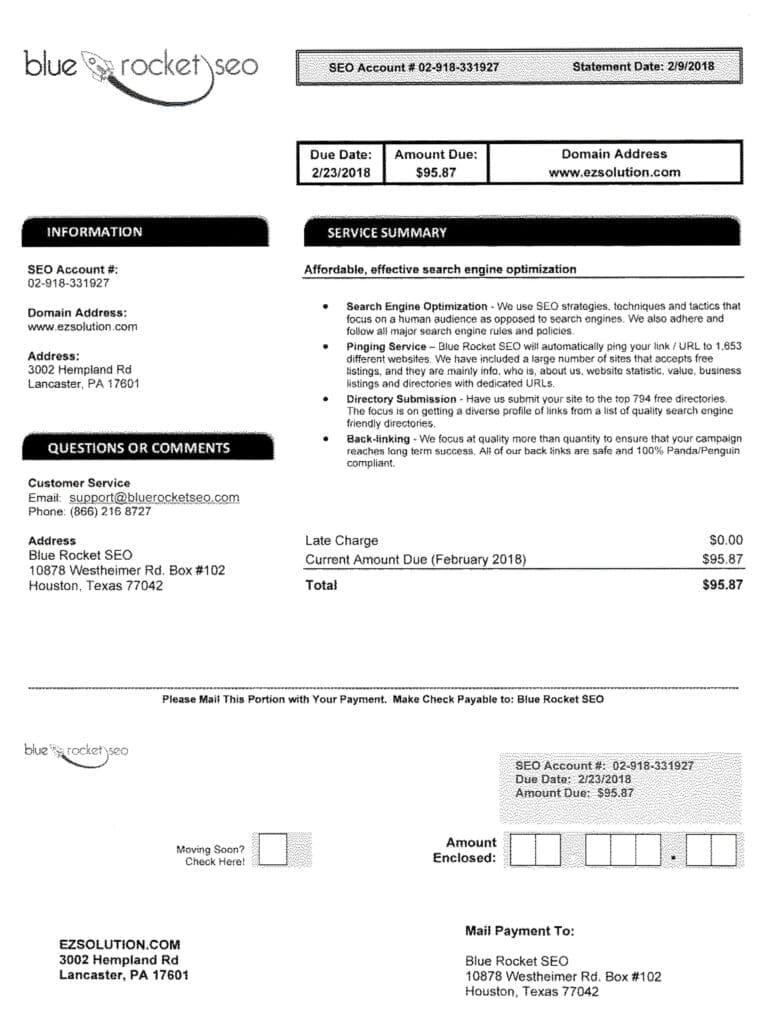
Last week, a couple of our clients called asking about a suspicious invoice they received from another SEO company. Shortly thereafter, this arrived on our own fax machine:

Scam SEO Invoice

Behold, an invoice from a company we had never heard of, for a service we didn’t need or want (especially since we’re an SEO company). Clearly, this is a scam – we see a ton of them every day (just ask our IT services division). But even if this wasn’t a fake invoice, it raises some serious issues about legitimate SEO services.

On the surface, this is actually a pretty convincing fake. Under the service summary, it talks about SEO strategies that follow search engine rules, and gaining safe, quality links. Sounds pretty white hat. Looking closer, there are a few things that made us raise our eyebrows, but especially if you’re not familiar with SEO, it can be hard to separate a bad company from a good one.

Here are a few things to look out for:

No one can guarantee a #1 ranking on Google

This is not an opinion. It’s actually a direct quote from Google. While this particular company doesn’t try to guarantee rankings or claim they have a special relationship with Google, many disreputable SEOs do.

In reality, Google’s algorithm always looks for the best, most relevant results, and there’s no way to assure you’ll reach the top spot. Not only is the algorithm constantly changing, but search results vary based on who’s searching when, where, and how. A good SEO should be able to help you drive more quality organic traffic to your website, but it’s generally irresponsible for them to guarantee specific rankings or results.

Beware promises of thousands of links

A link is like a vote that endorses the value of your website. Imagine if a company promised a political candidate thousands of votes in an upcoming election. Sound shady? That’s essentially what many black hat SEO companies do.

Ideally, link building is an organic process where people discover your content and love it so much that they share it and link back to you. The best SEO companies can do a lot to optimize your content and build relationships with industry and media outlets that may help promote it. A company who is promising tons of backlinks is probably doing so with low-quality or even toxic links that may hurt your business.

The SEO scam above specifically talks about free directory links. This is true. There are thousands of business directories that list your business’s name and contact information, which are important, especially for local SEO. However, you don’t just want to get a link from these directories, you also need to ensure your business information is accurate and consistent. Furthermore, you still want a more diverse portfolio of links than just directories.

>> Related Article: Local SEO: What is Is and How it Works

Be cautious of vague or secret SEO strategies

SEO is complicated, no doubt. Between algorithms and keywords and content optimization, there’s a lot to know. But despite the complexity, best practices for SEO are well researched and well documented. They’re no secret.

Any SEO company that claims to have a secret process or can’t explain what they’re doing and why is suspect. Trust us, they haven’t singlehandedly cracked Google’s algorithm. A good SEO company should be able to outline a specific plan for your business, including things like keyword research, competitor research, website audits, content creation, and outreach or link building strategies.

Make sure they talk about content

Years ago, SEO may have been little more than keyword stuffing. Today, while keywords and technical SEO are still an important piece of the puzzle, search engines have gotten a lot more sophisticated. Search engines are trying to return the best and most relevant answer, which means they’re looking for the source with the best information. Content is how you provide that relevant answer.

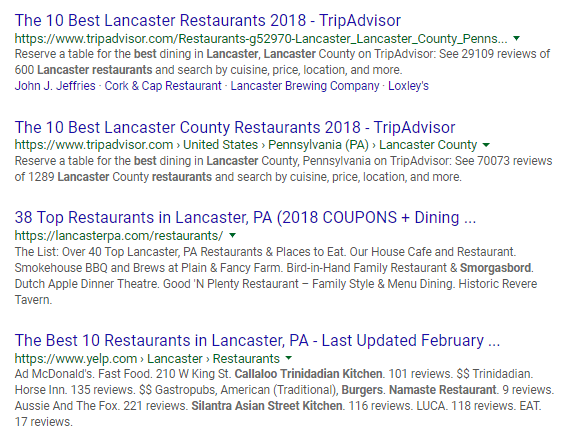
For example, try Googling “best restaurants in Lancaster, PA.” The top organic results aren’t restaurants. They’re all articles or lists of popular restaurants in the area. Search engines know that content about the top restaurants is more useful to the searcher than simply listing the restaurant websites in the search results.

SEO Content SERP example.png

SEO and content are inextricably linked today. You can’t do SEO without quality content to optimize, and it’s a waste of time for you to create great content that no one can find. Whenever you’re looking at SEO services, make sure you’re having a conversation about content.

Good SEO services cost more than $95.87

If a deal looks too good to be true, it probably is – and that remains true here. Scam SEO companies will always claim that they do better for less, but the simple truth is that good SEO services don’t come cheap.

According to a survey from Rand Fishkin of Moz, SEO agencies reported monthly billings ranging anywhere from $500-10,000/month per client. Small or medium size businesses would likely fall closer to $500-2500/month.

Regardless, the $95.87 on the fake invoice is suspiciously low. Likely, that would only pay for an hour or so of SEO work. Think there’s an SEO company out there that can do keyword research and write, publish, and promote optimized content that will improve your search traffic in an hour? Me neither.

When in doubt, ask!

If you’re working with or considering working with an SEO company, and you have any doubts about their services, don’t be afraid to ask questions. Ask the company to explain their service offerings, and get second opinions from other SEO experts. We’re always happy to answer questions and/or assist with your SEO service needs, plus you can post questions on active SEO chat forums like Moz Q&A.

Read more

Categories SEO

Local SEO: What it Is and How it Works

Local SEO is a method for promoting your business by optimizing the online presence of your physical business location(s). Learn more about how to optimize your business for local search.

Categories SEO

Local Visibility Packages: What to Know About Local SEO

Local search visibility can be improved by optimizing your local SEO, which includes syncing accurate business information with the many directories and sites out there that lists those businesses. Furthermore, it’s about working to increase your online visibility, particularly as it concerns local SEO marketing.

Aside from having your business info (name, address, phone number) displayed on a directory listing, reputation management and ongoing maintenance of your business info is crucial to establishing you as a credible business in the eyes of search engines.

Listing accuracy is vitally important. Inaccurate listings not only harm the business they’re for (if they’re active), but they can damage the trust Google has worked so diligently to foster between users and the search engine.

Moz Local’s George Freitag summed up listing accuracy nicely when he said:

Listing accuracy is Google’s method for determining whether Google can trust a local business result.

To obtain listing accuracy, Google relies on a number of places to find your information including phone directories and phone books, directories for specific sites, review websites, news websites, government websites, and more; and each time one of these locations mentions your business info, it increases Google’s confidence in the information you’ve provided.

Similarly, when a site or directory lists a variation of the details you’ve provided about your business—such as the wrong address or phone number, or an address/business name listed in a different format or variation—it decreases Google’s confidence in the validity of the business information, making it less likely to show your business in local results.

And why? Because Google wants to maintain the trust between its search engine and the users, since if too many users are dialing the wrong business number or trying to find businesses that don’t actually exist, people are less likely to trust Google’s results.

What’s worse is that if enough online sites provide contradictory information to what you’ve given for your business, that inaccurate information could override the details you’ve listed, forcing Google to trust these other sources more than your business. In the case of store hours or address, this can be a huge detriment to your business.

Image result for local visibility meme

A breakdown of what you need to do to improve your local SEO visibility:

  • Create your Google “My Business” listing.
  • Find all of the variations and instances of your NAP (name, address, and phone number).
  • Fix all instances of your NAP to reflect the correct business info you’ve provided in your Google My Business listing.

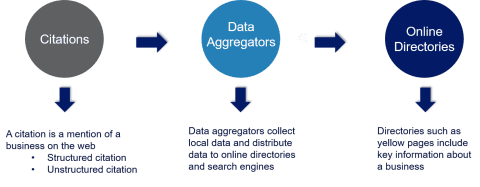
The real problem, as you can imagine, is finding every instance of your NAP and correcting it. This actually amounts to a tremendous amount of work, both searching for and correcting any aberrant mentions of your business. You might not have the know-how or time to do this work yourself, which is where a primary data provider comes in. We’ll talk about those after we get into your NAP.

Understanding the importance of your NAP and how it affects local SEO results

Providing your NAP by creating a Google “My Business” listing should be your first step, way before you dive into any kind of directory, review site, or phone book.

Before you start listing your information on other sites (citations), you need to find any and all existing NAP variations on the web and correct them for accuracy. Building local citations before you correct the NAP variations could create conflicting data for Google who may not trust that your business is legitimate, and may neglect to include it in local SEO marketing results.

Your business’ name, address, and phone number are important for a number of obvious reasons, from helping people get in touch with you and actually visiting your brick-and-mortar location, to making it easier for your audience to identify your brand.

For example, if your business is The Amazing Hotdog Factory, but you find variations for The Hotdog Factory, The Amazing Hotdog, and Amazing Factory of Hotdogs, people won’t know what to call your business, and Google will feel the same way.

To start searching for NAP variations, go to Google and start searching for your company name, your phone number, and parts of your address to see where your business info might be appearing. You can also do site: searches through Google, looking through specific sites for mentions of your NAP. If a website has a search function, you can also use that to search for duplicate/NAP variations.

Sound like a lot of work? It can be, but you also have the option to hire a third-party primary data provider capable of doing the work for you, and then some.

What a “Primary Data Provider” can do for your local  search results

A primary data provider is someone you can go to and they will do the hard work of correcting your listing accuracy for you. Most providers have an extensive network of directories and listings they can search for mentions of your business info and then correct any inaccuracies should they come up.

graph

The benefit to this is helping you establish that confidence in Google to trust the information you’ve provided. Once Google trusts your info, it feels confident enough to plug in your business info into local SEO results. Before you ask if that’s all it takes to fix the problem and cause you to appear more in relevant local SEO results, remember: sites change all of the time, and new ones are being created daily. Ensuring all citations—mentions of your NAP located on the web—remain consistent, a primary data provider will regularly check all sites in their network to maintain accuracy.

While they take care of the work of managing citation accuracy, a primary data provider may also put your business info on other sites you haven’t already appeared on, which is a benefit of the provider’s existing network. All of these extra sites that list the correct name, address, and phone number further increase Google’s confidence in your business’ legitimacy and it has a greater chance of appearing higher in local search results.

Optimizing local SEO contributes to better brand visibility and reputation

Another part of local SEO marketing is reputation management. This involves managing feedback, reviews, or comments left about your business or products on review sites such as Yelp or Angie’s List, as well as social media sites where your audience might be able to reach you. Reviews are often visible in local SEO results, and if you have reviews, comments, or questions not being addressed, it can be damaging for your business.

Local SEO marketing is sometimes neglected by businesses who think they can just rank well in Google and be seen by their target customer, but because Google actually differentiates global and local results, it can be a huge mistake to neglect this part of your optimization efforts. If you’re struggling to rank well in local results or can’t manage to correct all of the many NAP variations for your business, we also specialize in dealing with local SEO and business directory listings. Talk with our website design and SEO agency now.


Read more

Categories SEO

5 Things to Ask Your SEO Company

 As Search Engine Optimization continues to evolve, so to should the services of any SEO company worth its salt. From Panda to Penguin, the eradication of poor quality content and spam links was only the beginning.

Newer changes like machine learning in the form of RankBrain and major Google AdWords updates continue to shake-up SEO marketing. Even the most minor changes can cause ripples in the SEO industry, leaving professionals with a need adjust their tactics in order to stay relevant.

With every algorithm update and change to Google’s advertising platforms, SEOs need to keep on their toes to stay ahead. If an SEO doesn’t evolve, neither can their business.

As a business owner, you expect your prospective (or current) SEO company to be an industry expert. You want a team full of knowledgeable people committed to staying ahead of the SEO marketing curve. Even more than their knowledge and experience, you want to be able to trust your SEO company to do what’s right for your individual business needs.

To see the most return on your investment and partner with the right team, here are some things you should always ask your SEO company:

1. How will you improve my rankings?

This question is by far the most important, and complicated, to ask your SEO company. If you’re interviewing a good SEO company, there should be no easy answer to this question. Because of its complexity, it’s best to ask it right out of the gate.

search-rankings

The best SEO company will not shy away from the question, while a less than desirable company may try to distract you with irrelevant data or industry jargon that’s simply not important at this stage in the game. They should have no problem walking you through their process – preferably with an easy-to-understand guide.

If you’re posing this question to your current SEO company, the same rules apply. They should be confident in their response and able to supply the data you need to support their choice in tactics.

2. Do you guarantee rankings?

If the first question didn’t weed out the SEO snake oil salesmen, this one surely will. Always ask your SEO company if they guarantee rankings. If they say “yes,” the conversation should end there. While guaranteed rankings might seem like a good thing, they’re an outdated SEO marketing practice that no respectable SEO company will stand by in 2016.

With algorithm changes and platform updates, rankings are hardly ever stable. It’s natural for your rankings to fluctuate a few positions day-to-day. The right SEO company understands the natural ebb and flow of rankings and won’t guarantee anything.

What they should do instead is assure you that their processes are proven to improve rankings, optimize your site, and bring you quality traffic. Modern SEO marketing is less about rankings and more about attracting qualified, ready-to-buy leads to your site. This is what you should want from your SEO marketing efforts instead of a guarantee.

3. What are your certifications?

Once you feel comfortable with the high-level view your SEO company gave you of their processes, it’s time to nail down their experience. You’ll find SEOs that have been in the industry for 20 years, and those that are relatively new. While years of experience can be an advantage, you want to ask about certifications.

google-partner

An SEO company that has taken the time to learn new material and take a series of tests to prove their knowledge is one you want. This proves that they’re willing to do the work it takes to expand their skills, making them an expert in their industry.

SEOs that take the necessary time to complete and renew their certifications are usually up-to-date with the most current search trends. Look for an SEO company that is Google Analytics and AdWords certified, and is a Google Partner. Other certifications like Hubspot Inbound, Content Marketing Institute, and DistilledU are icing on the cake.

4. Do you need to make changes to my website?

A good SEO company will have on-page changes as some part of their SEO process. The best SEO company will have a set-up process that clearly outlines any frontend and backend changes they need to make to your site, and why these changes need to happen. If these on-page changes aren’t scheduled into their process within the first month of service, they’re not the right company for you.

On-page changes set the stage for an SEO marketing campaign – that’s why they should be done before any other SEO efforts begin. These changes help address any technical issues that may be negatively affecting your site, getting it up to Google’s standards. You should also expect help with content optimization for important keywords, and even ways to improve your user experience.

It’s so important to ask your SEO company about the changes they want to make to your site before you give them any sensitive information like website logins and FTP credentials. Changes will most likely need to happen on a server or database level and an SEO company that is inexperienced with backend changes can seriously damage your site.

5. Can you provide case studies, references, and testimonials?

After you have a good idea of the company’s SEO processes and experience, it’s a good time to ask for some tangible data. Your SEO company should have a wealth of educational material and case studies that are used to back-up their good work. If the company doesn’t have any current case studies, that should be a red flag.

reviews

Case studies are important to look at because in most cases, data doesn’t lie. When you can see true clients with real traffic and ranking improvements, you can better understand the SEO company’s worth.

Aside from case studies, references and testimonials or reviews are the best way to hear about the company from a previous client’s position. While a company can make themselves look good by choosing the best case study, their clients will be honest. As in most things, the best way to find out if something worked is to ask a person who has used it before.

Adding SEO marketing to your digital marketing strategy can make or break your site. While a successful SEO marketing campaign can double your traffic and sales in some cases, a bad campaign can tank your site’s rankings. Very few online business can afford a manual penalty brought on by shady SEO practices.

Protect yourself and your assets by asking these questions before signing up with an SEO company. When you find a company that can answer these to your satisfaction, you’ll know you’ve found your search partner.

SEO strategies CTA

Read more

Categories SEO

Recent Updates to Search Results – What Do They Mean for PPC and SEO?

 In 2016, you’d be hard-pressed to find an internet user that hasn’t used the Google search engine, at least once, in an effort to solve their query. Whether this user is looking for a solution to their problem, searching for the perfect something to buy online, or they’re just curious about “how far away is the sun from the earth,” Google certainly has the answer. And sometimes, you don’t even have to leave the search engine to find it.

google query

Google isn’t the only search engine on the market, though. As of January 2016, Google’s market share remains the same as 2015 – at 63.8%. Maintaining the same market share year over year speaks to a stable company, especially when your closest competition is more than 40% behind you.

But when you’re Google, maintaining your market share isn’t good enough. While Google remained the same, their closest competitor Bing actually increased their market share. As Bing continues to increase their market share, even if it’s only by a few tenths of a percentage point here and there, they’re encroaching on Google’s territory.

Competition within any market keeps it healthy and alive. In the case of search engines, stiffer competition means more updates to search results and functionality. Cutting edge technology is being developed at Google every day to ensure that the search engine keeps evolving before the competition has the chance to catch up.

PPC Marketing

With so many recent updates to Google’s advertising service, Google AdWords, the search engine continues to make it clear that paid ads are the future of search. More and more advertisers are paying to play in Google’s search results – and the search results are starting to reflect that.

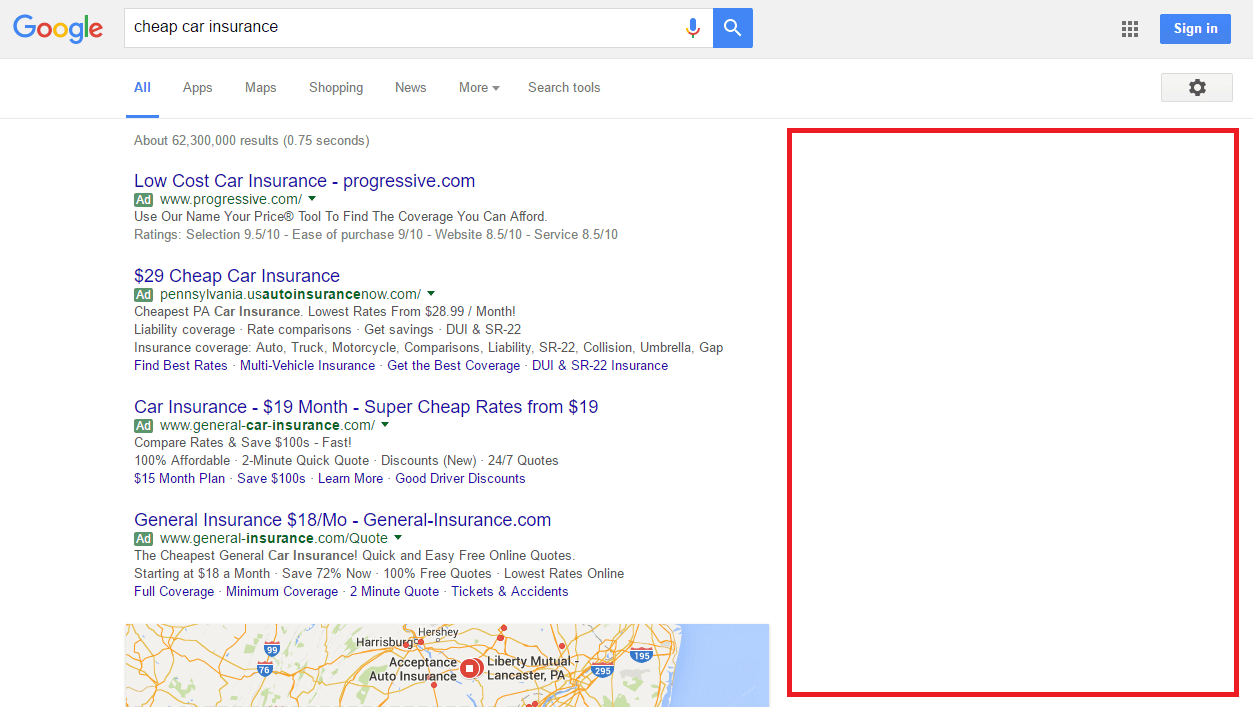
Ads stop displaying in search results sidebars

In February, users may have noticed that their search results suddenly looked different.  In fact, it was around this time that Google pulled pay-per-click ads from displaying in the right sidebar of a user’s search. Instead of a sidebar full of paid ads, it’s now blank. PLAs (product listing ads) and knowledge graph cards are the only elements that may still display on the right sidebar for select searches.

no ads in sidebar

This change to the search engine results pages (SERPs) was one of the biggest of the New Year from Google. Advertisers were understandably shaken by the adjustment. Instead of eight to ten chances of your ad appearing above the fold, you would be left with only four. The effects of removing sidebar ads were felt on mobile devices, too. Some searches from a mobile device like a smart phone return mostly ads, well above the fold. Currently, most search results pages display only three or four paid links above the organic blue links.

Since this change, advertisers have had to get serious about the PPC marketing accounts – weeding out low-ranking keywords that just don’t work and cutting down on the excess. Even though bids haven’t skyrocketed like some advertisers feared, the competition for those four spots has become even harder.

Shopping ad changes

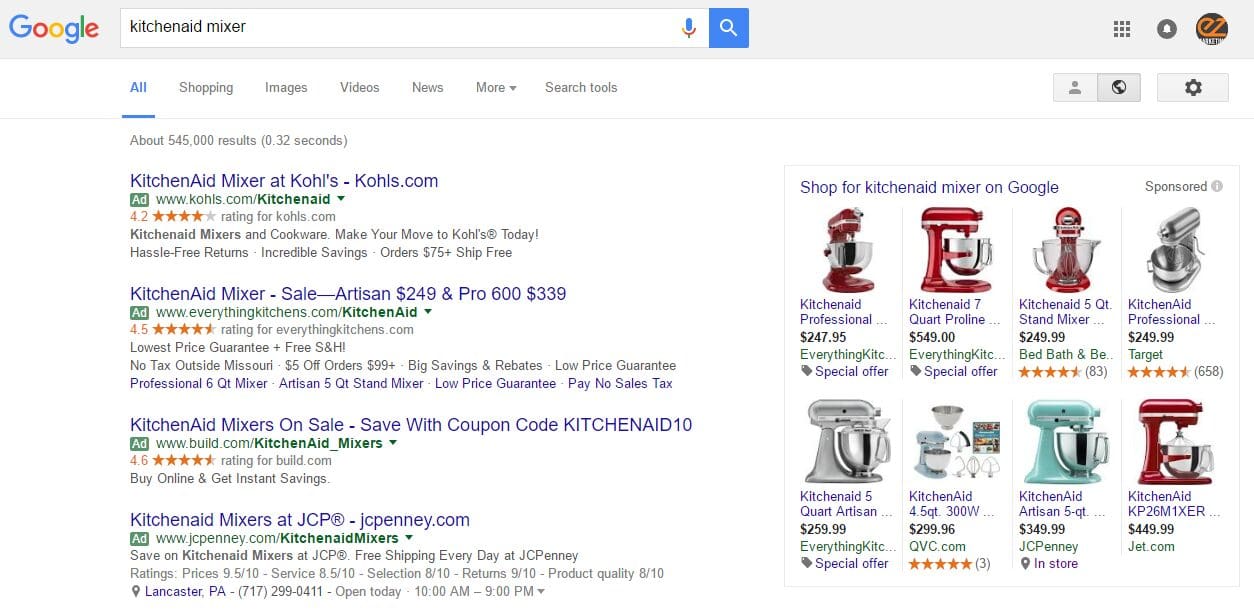
As search ads disappeared from the right sidebar, shopping ads stuck around. The placement of PLAs hasn’t changed much. In a search for “kitchenaid mixer”, we’re still seeing results displayed to the right of the search result in the sidebar.

pla ads

Instead of products being displayed on their own, we’re starting to see many more useful extensions accompanying each listing. Along with reviews, new PLA extensions include things like special offer tags, price drop percentages, and in store location pins. Google has made it easier than ever for users to shop right inside the engine, never having to navigate to another website.

More changes for PLAs are still to come. For listings at the top of the SERPs, Google is experimenting with expandable blocks. A user can toggle a button to reveal or hide more sponsored product listings. Upcoming product filter buttons will allows users to go even further, sorting PLAs by price, location, and ratings.

Expanded text ads

Aside from an impending overhaul coming to Google AdWords in the next year, the biggest change affecting PPC ,marketing is expanded text ads. Currently, Google AdWords allows for one 25-character ad headline and two 35-character copy lines.

Instead of 60 short characters, advertisers will soon have 115 to work with – that’s almost 50% more room to grab users’ attention! Advertisers are understandably excited about this change. More characters mean more opportunity to craft a really great ad.

The expanded text ads aren’t currently a feature in Google’s AdWords platform, but will be soon. This is just one of many updates coming to a revamped AdWords. No word yet on when this platform will be released to the public, but it’s already being actively beta tested by select users.

SEO Marketing

Google’s focus on updates to its paid advertising service show how much focus the company is placing on paid advertising. So much so, that some businesses feel as if there’s no other way to rank within the search engine. As many updates as Google AdWords and paid search have receive in the past few month, organic search isn’t far behind.

Ads stop displaying in search results sidebars

This update was already covered from a paid advertising perspective. However, removing ads from the sidebar has had an equal effect on organic search, just in a different way. When Google removed ads from the sidebar, they added one more ad to the three that would previously display above organic blue links on a SERP.

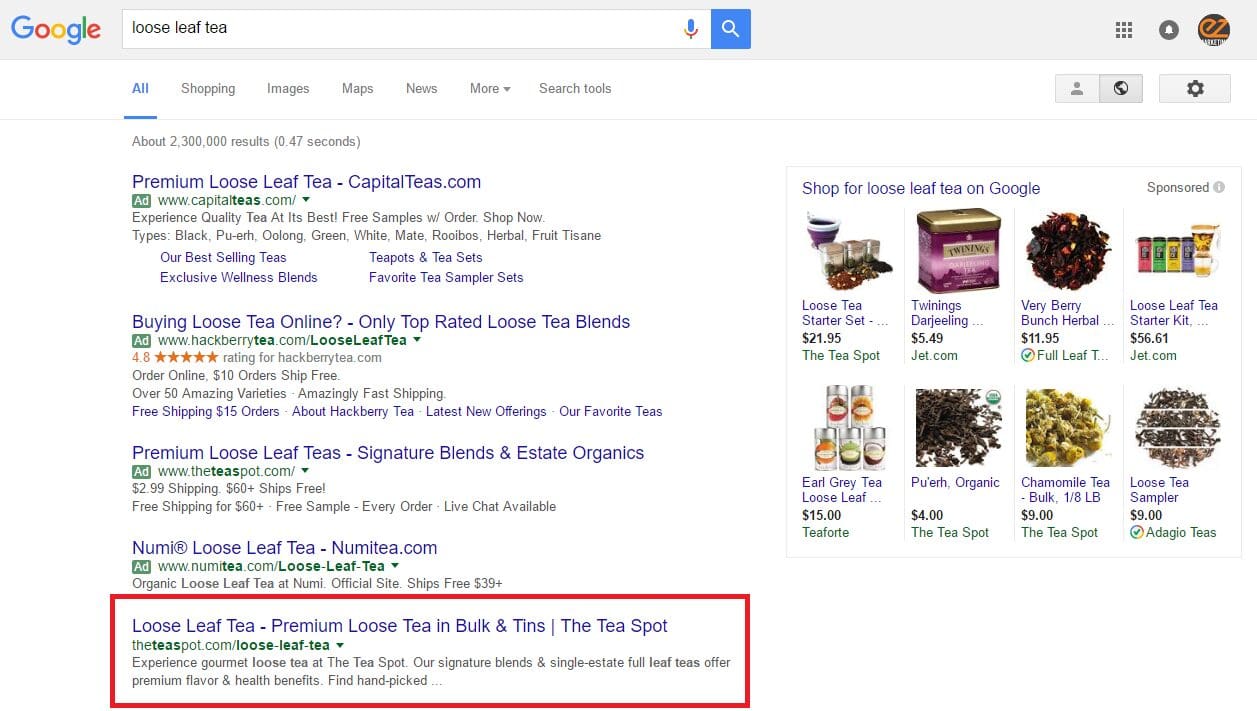
Four paid ads instead of three on the new SERPs mean there is even less room for organic results. In a search for “loose leaf tea”, a user is confronted first by four paid ads, then by a block of PLAs to their right, and finally a few organic results toward the bottom of their screen. Depending on their screen size, sometimes only one organic ad is visible above the fold.

tea query

One more ad may seem insignificant, but the amount of prime real estate is takes from organic results is not. You may have already noticed how things like knowledge cards, local packs, and PLAs effectively push organic results further and further down the page. Sometimes, the first organic result isn’t even visible above the fold.

Rich search results

Elements we’ve mentioned quite a few times already, like knowledge cards and local packs, are all known as “rich results.” These are search results that have been enhanced, making them more valuable for users. Just in the last month, Google has begun expanding the rich result repertoire.

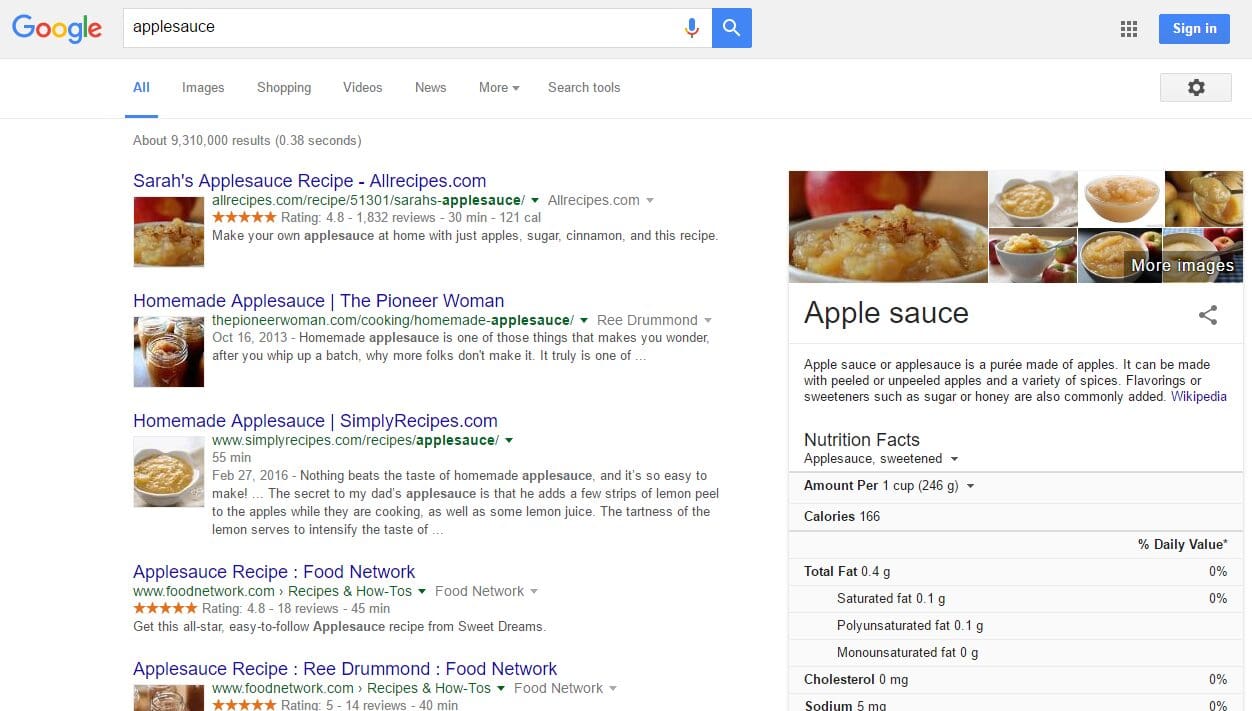
Now, when a user searches for “applesauce”, their SERPs are filled with even more images of food! Instead of a standard blue text link, all searches involving recipes are accompanied by recipe thumbnails. Some searches even include knowledge cards in the sidebar with a definition, access to more images, and nutrition facts.

rich results

One can only assume since Google is setting such a visual precedent with recipe searches that they won’t stop there. Marketers need to get more creative with their content, producing even higher quality information that’s made to draw users in. The use of thumbnails beside results is just the beginning.

AMP pages

AMP pages, or accelerate mobile pages, aren’t new to Google this year, but they are starting to gain some serious traction. Simply put, these speedy mobile pages are made to be consumed quickly. The way in which AMP is built allows for fast load times with little downtime for users. In addition to Google mobile results, you’ll find these pages on Facebook as Instant Articles.

As more and more users search on their mobile devices every day, the more people have a need content that loads quickly. In fact, 80% of internet users own a smart phone. It’s safe to assume that most of them have performed a Google search at least once from their smartphones.

AMP allows content to be more on-demand than ever. Nothing turns users away faster from your mobile site than slow-loading content. AMP isn’t only the future of mobile search, it’s the future of all search. As the amount of content on the web continues to grow, so does the need for ridiculously fast load times.

Google continues to grow and evolve, and the driving force behind most of their changes is to better serve their users. When you understand all of the recent changes and how they impact your PPC marketing and SEO marketing, you can better serve your customers, too. Talk to our digital agency in Lancaster, PA for more information or if you’d like to try digital marketing for your small business.

SEO strategies CTA

Read more

Categories SEO

Benefits of Ranking in Google


There is no doubt that Google owns the majority share in the search engine industry. Bing and Yahoo are steadily taking more of that share, and an Apple search engine could do serious damage by having all of their devices default to their own engine. Whatever the case may be in the future, the ranking in Google is currently the most critical for businesses, as the search engine giant owns 70% of the search engine share.

With 3.5 billion search queries per day, your business could garner a lot of website traffic by ranking for keywords related to your business. Given the rise of YouTube, Facebook, Amazon, and more as search engines, just how important is it to rank in Google regarding your SEO?

Ranking on the first page of Google: statistics

Multiple studies have turned out a variety of statistics over the past few years regarding the impact of Google ranking, dealing with factors including:

  • Branded vs. non-branded searches
  • Searches without ads or with ads (ads above and/or beside)
  • Mobile vs. desktop
  • Long-tail keyword searches

When a user performs a search, about 90% of clicks go towards the organic search results, with the remaining 10% to the pay-per-click ads above or beside the organic results. While PPC campaigns are still important in an integrated marketing strategy, ranking organically lets you own those positions and gain more traffic.

This heat map from Mediative shows how most users look past the advertisements to get to organic search results.

search result heat map

Similarly, the percentage of traffic from the first page of Google is about 91%, while only 4% of users click through to the second page or results, 1% to the third page, and then it drops off into fractions of a percent.

google-traffic-by-page-results

This tells us that if you aren’t ranking on the first two pages on Google, the likelihood of you gaining any organic traffic to your website is less than 1%.

Even if you are ranking on the first page of Google, it is obvious that the top results get a higher click-through rate (CTR) than the others. Click-through rate is the number of users that click through to a certain result compared to the rest of the results on the page.

So when it comes to click-through rate on the first page of organic search results, the biggest benefit for ranking in Google is that the first position typically gets about one-third of all clicks, but with many different factors, the results may vary.

This can be backed up by click-through rates of first page organic results in Google.

Click-through rates of first page results

With an ongoing study on CTR by Advanced Web Ranking, which is one of the best keyword tools available, we are able to see results from testing these factors from hundreds of thousands of keyword searches and websites.

So let’s break down the click-through rates for all the different variations of searches with data from the United States.

Overall CTR for all mobile vs. desktop searches

all searches ctr mobile v desktop

Mobile has overtaken desktop as the most-used device for searches on Google, so it is important to have a mobile-friendly website to even be considered for a first-page ranking. In this study, 30% of desktop searches click on the first position, while 27% click on the first position on mobile devices. This could be because on a desktop computer, you can see 6 or 7 results on the page and choose to go with the first, whereas with less landscape on mobile, you only see two or three results and give preference to what seems like the best.

CTR for searches with or without ads

searches with or without ads ctr

When ads are displayed, whether above the organic results or beside them, organic click-through rates take a ten percent hit because users have other options to choose from. This is especially true on mobile where ads are displayed, because they take up the screen before the searcher has to scroll down to organic results.

CTR for branded searches with or without ads

branded searches with or without ads ctr

When someone does a brand search, they are specifically looking for a company that they know, trust, have heard of, or have used before. So there is a much higher likelihood that said brand will show up higher in results, which is why it has the highest CTR of 42 percent among these tests. When ads come into play, it allows for competitors, or even the searched brand itself, to pay for ads that display above organic results and potentially steal traffic from their competition.

CTR for unbranded searches with or without ads

unbranded searches with or without ads ctr

An unbranded search is when a user is looking for a product or service, but they do not know which company they want to use, or they are shopping around for the best prices or features. So it makes sense that there is a bit of a drop with unbranded searches when it comes to unbranded searches, especially when ads are involved. At a 22 percent CTR for the first position of unbranded searches with ads, it is the lowest click-through rate for all of the studies done. If you are doing also doing pay-per-click using Google AdWords, unbranded relevant searches would be the keywords to target, as they are stealing a lot of the traffic from the top organic results.

CTR for branded vs. unbranded desktop searches

branded vs unbranded searches ctr on desktop

A big reason you want to build your brand awareness, loyalty, and trust is so that people begin to search your brand name along with your services or keywords. As you can see, when a branded search is done on desktops, it gets 41 percent of the clicks as opposed to just 26 percent for unbranded searches. However, when it comes to the second position and further down, both searches tend to match when it comes to click-through rate.

CTR for branded vs. unbranded mobile searches

branded vs unbranded searches ctr on mobile

On mobile devices, there isn’t as big of a difference between branded and unbranded searches as there is on desktops – but there is still a difference. Oddly enough, unbranded searches have a higher CTR in positions two through five, and then begin to match up with branded searches.

CTR for long-tail keyword searches on desktop

long tail keyword searches ctr on desktop

Long-tail phrases, which include at least two keywords, pose much more precise intent. Long-tail keywords are less competitive, which makes them easier to rank, and you should consider putting together a very in-depth long-tail keyword list to use in your website copy and content marketing strategy. When searches are done with four or more keywords, they have a slightly higher CTR on desktop than searches done with fewer keywords. But all of them have around a 30 percent CTR on desktops, which is why you should begin to target and track your long-tail keywords.

CTR for long-tail keyword searches on mobilelong tail keyword searches ctr on mobile

When it comes to mobile, long-tail keyword searches tell a slightly different story. While four or more words still get the highest CTR at 32 percent, there is a drastic drop from three keywords to two, and especially to one keyword. One-keyword searches on desktops got a 30 percent CTR, but on mobile they get just a 19 percent CTR.

Calculating your potential traffic

As you can see, there is a huge benefit to ranking on the first page of Google. Your brand awareness will rise, hopefully along with more branded searches, and so will organic traffic to your website.

Let’s say that you ranked for a long-tail keyword that got an estimated 1,000 searches a month. Typically, you would garner about 30 percent of those click-throughs to your website.

1,000 searches a month X .3 CTR = about 300+ more visitors to your website

Now imagine if you started to rank for a combination of different long-tail keywords, or specific buyer keywords for your products and services. You can begin to see how it will add up to a ton of monthly organic traffic to your website, resulting in more leads, sales, and hopefully long-term and loyal customers to your company.

How to get keywords ranking in Google

Without going into too much detail about the entire process that an SEO agency would be able to do, here are some top-level tasks you can do yourself that can help to get your site ranking.

Optimize your website

First and foremost, you want to optimize your website for search engines. This means having a mobile-friendly site with a fast load time and a good user experience. Every page should be optimized with tags and copy, and any issues affecting your website rankings should be addressed.

There are over 200 ranking factors that experts have determined that Google uses. It becomes even more complex, as Google’s Matt Cutts has also stated that some of those ranking factors can have up to 50 different variations.

Therefore, one of the best digital strategies is a content- and data-driven strategy that acquires authoritative links and engages with a social audience.

Your website also needs better copy and a strong customer journey, because without these, users may bounce off of your site and back to the search results where your competition is. If you have a high bounce rate, which is when someone goes to a page and leaves it in under a minute without visiting another page, you should see if your website is making any common website mistakes that are raising your bounce rate.

Keep in mind that the more high-quality content pages you have on your website, the more chances you have to rank. If you have a smaller website with only 10-20 pages, then it will be much harder to steal traffic from your competitors with a larger website presence.

Start producing resourceful content

One easy way to add more relevant pages to your website is to help your visitors find a solution with a resourceful blog. We’ve gone into the benefits of blogging for business before, but essentially, it helps to build your brand and authority, earns trust in your industry, allows you to engage socially by sharing your content across social media networks, and boosts your long-tail rankings  which will drive more traffic – all of which will hopefully travel through your funnel to generate conversions.

The best type of blogging is long-form content, which is content that is generally 1,000-3,000 words.  The average content length ranking on the first page of organic results is typically at least 2,000-2,500 words, as you can see in this chart.

average-content-length-top10

When you create this long-form content, whether it’s an ultimate guide to a service in your industry or a how-to instructional post that walks someone through a problem, you may begin to attract links in your industry through outreach as well as content and social media promotion. With these authoritative and industry relevant links, you will begin to see those content pieces ranking higher, which will result in more organic traffic.

You can use this strategy by looking to see what content your competition has been developing, and create something far better and more valuable. Then you can research who linked to and mentioned them for their content and reach out to them to also get a link. When you can get the same websites that mention your competitors and some more, you should begin to outrank your competitors online.

Other forms of content other than blogging could be creating eBooks, whitepapers, case studies, influencer interviews, videos, infographics, slideshows, and much more.

When it all comes down to it, the main factors in ranking are optimizing your website and earning links, mentions, and shares from your industry. There are are many specific strategies you can use to try and rank online, but sometimes it’s best to worry about your business and leave the rest to the experts when you want your keywords ranking in Google.

SEO strategies CTA

Read more

Categories SEO

5 Things to Know About Reputation Management


Reputation management is about framing public perception of a company in a positive light. It involves shaping public opinion by influencing online information about that business, such as social media posts, search engine results, and user reviews. How the public perceives your business, goods, or services is your reputation, and managing that reputation is essential when user reviews and ratings are so influential in the minds of today’s consumer.

Your company’s reputation is always on the line, and protecting it is a full-time job. Managing your reputation starts with learning to prevent the negative comments and complaints from being lodged in the first place. Consider these user review statistics:

  • 4 out of 5 prospects will be influenced to change their mind on a purchase based on reviews—good or bad
  • 80% of consumers consider reviews to be on par with personal referrals in terms of trust
  • 90% of all review searches end on the first page

The customer can be a company’s worst nightmare or the brand’s biggest advocate. With the rise in review sites and their increasing availability, they’re being used to praise or condemn companies on a daily basis. A reputation manager’s job is to proactively preserve your reputation by responding quickly and implementing preventive measures that minimize the amount of damaging comments and reviews you might receive.

To understand why this role is essential for businesses, here are five need-to-know facts about reputation management.

1. You can’t do it all by yourself

It takes an immense amount of work and attention to detail to manage a company’s reputation. There are social media accounts to keep up with and customer review sites like Yelp, Angie’s List, and Google Reviews to monitor. Not only that, but customers expect you to respond to their problems via tweet and Facebook post right away or their level of frustration multiplies. That’s a lot of demand per customer, not to mention it calls for someone willing to be unbiased, apologetic, and restrained in his or her responses.

Many companies have made the mistake of writing hasty replies to negative reviews, only to further damage their reputation in the eyes of customers. Respond quickly with the facts, but remember that your comment is going to be read by everyone, not just the reviewer.

2. Reputation management is about more than handling the negative…

It’s also about accentuating the positive.

A reputation manager will spend most of his or her time addressing complaints and reviews on social media, but they’re much more than simple damage control. Protecting your reputation first requires you to build it. Regular upkeep of social media accounts and ensuring your information is positive and telling of what your business does is necessary. It’s imperative that customers have quick, easy access to your Facebook, LinkedIn, and Twitter pages; and that they know how to contact you in the event that they have a complaint, review, or compliment.

Keeping your reputation intact also necessitates regular updates to your social media platforms or blog. This continuous wave of content will allow an individual to direct your audience’s attention to your successes, rather than your failures, as may be the case with inactive social profiles. Content generation is key to burying any bad reviews and making your company seem like it’s keeping on top of providing a better service and experience.

3. You can encourage customers to leave honest reviews…

Just direct them to do so.

review-me

Nearly 80% of the tweets on customer service on any given week are negative in tone. By letting all of your customers know how and where they can give you feedback, you may be prompting satisfied customers to leave good reviews when they may not have otherwise done so.

If a client is happy with a product or service they may simply move on, glad to repeat the transaction in the future; but the same may be true of unhappy customers who may not leave any comment at all. Instead, they share their bad experience offline.

“A dissatisfied customer will tell between 9-15 people about their experience. Around 13% of dissatisfied customers tell more than 20 people,” according to the White House Office of Consumer Affairs.

Having negative reviews won’t instantly destroy your reputation. It’s how you handle those reviews that dictates how customers see you.

4. A few negative reviews won’t hurt you…

But how you handle them might.

While they say it takes 12 positive reviews to undo one complaint, your reputation manager should be well versed in dealing with poor customer experiences quickly and sympathetically.

Respond to these negative experiences promptly.

Tell the customer how you’ve taken measures to prevent their problem in the future, and have the confidence to invite them back once you’ve solved the issue.

Obsessing over or attacking the customers who leave negative reviews will only exacerbate the problem and your reputation.

5. Your reputation is built on what you’ve done…

Not what you are going to do

It would be easy for a business owner to sit down and rave about all of the changes they have in the pipeline, but promising change is not nearly as powerful as demonstrating it. Your reputation will be built upon your actions, not your intentions; and going overboard with future plans will do nothing to alleviate the problems your customers have today. To manage your reputation effectively, you have to focus on what you’re doing now.

  • A sincere apology for a poor customer experience
  • Prompt replies to customer questions and complaints
  • Improving the quality of a service or product as a result of a customer complaint

If you’ve done any of the above then that’s something you can point to as a positive highlight. It demonstrates your company’s ability to listen to a customer’s problem and solve it. Even if your customers have had a few bad experiences in the past, knowing that you work as hard to keep your current clients as you do to secure new ones says a great deal about your business.

When you consider that it costs roughly six times more to acquire a new customer than retain an existing one (Bain & Company), you’ll start to understand the value of keeping clients happy. Building your authority with a reputation manager will help you grow your client list and turn your current customers into loyal brand warriors.

If you’re looking for a marketing agency near you in Lancaster or nearby York and Harrisburg markets, make sure you give us a call. We’d love to help.

Start A Conversation

Read more

Categories SEO

Google’s New Algorithm: RankBrain

Google recently announced a machine learning technology called RankBrain designed to deliver the user more precise search results. There was a lot of talk recently by webmasters that thought there was an algorithm update, and then Google confirmed it to be RankBrain. According to Google, it was actually live in early 2015 and running globally for months.

The machine technology is basically an artificial intelligence algorithm that teaches itself how to learn and evolve, instead of having a human program its technology.

Read more

Categories SEO